Two of Everything: The Pantry Psychology Behind Why Fragmented Shopping Creates Waste
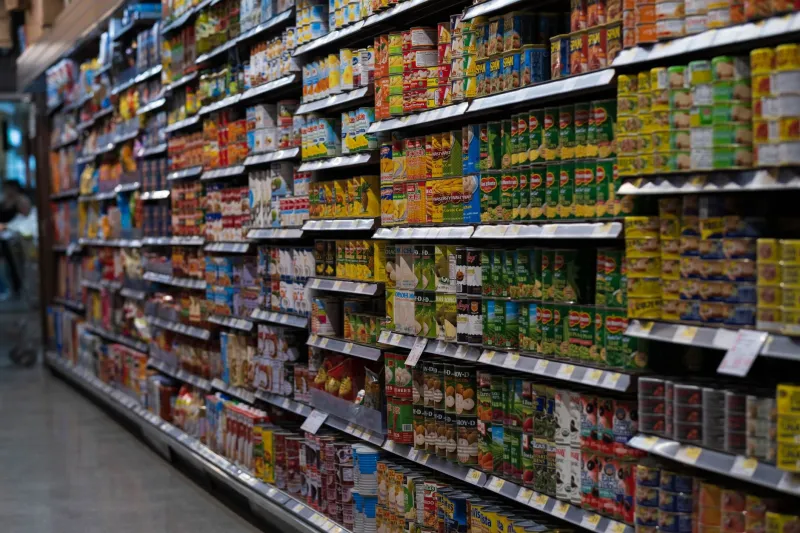
Open your pantry right now. Not to grab something — just to look.
If you're like most American households, what you'll find is a landscape of partial information: cans pushed to the back, duplicate spices from two different grocery runs, a bag of pasta that's three-quarters empty sitting next to a brand-new bag you bought because you couldn't remember if you had any left. Maybe some condiments with expiration dates you'd rather not check.
This isn't a cleanliness problem. It's a shopping pattern problem — and it has a specific cause.
How Fragmented Shopping Scrambles Your Inventory
When you buy groceries at three or four different stores, something subtle but significant happens to your mental model of what you own. Each store visit exists in its own context. You're at Trader Joe's for their specific pasta sauce. You're at Costco for bulk olive oil and snacks. You're at your local grocery chain for produce and meat. And you're at a specialty market for that one ingredient you can only get there.
The problem is that your brain doesn't maintain a perfectly synchronized inventory across all four of those shopping contexts. Humans are notoriously poor at tracking distributed information — especially when it lives in a physical space (your kitchen) that you only partially audit before each shopping trip.
The result: you buy things you already have, and you forget to buy things you're about to run out of. Both errors cost money. Both generate waste.
The Numbers on American Food Waste Are Stark
The USDA estimates that American households waste approximately 30–40% of the food supply — with a significant portion of that waste happening at the consumer level. The average American family of four throws away an estimated $1,500 worth of food per year.
Not all of that is attributable to fragmented shopping, of course. But consumer behavior researchers have identified a strong correlation between the number of stores a household shops at regularly and the rate of duplicate purchasing and inventory mismanagement. When you don't have a unified view of what you own, you can't make accurate decisions about what to buy.
Think of it like managing five different bank accounts with no central dashboard. You'd constantly be unsure of your total balance. Your pantry works the same way when it's stocked from five different sources on five different schedules.
The Psychology of the "Just in Case" Purchase
There's a specific cognitive pattern that drives a lot of duplicate pantry purchases: uncertainty-driven buying. When you're standing in the grocery store and you can't remember whether you have garlic powder at home, your brain defaults to a risk-avoidance calculation. Buying it unnecessarily costs you $3. Forgetting it and not having it when you need it costs you a ruined recipe and an extra trip. So you buy it.
This is completely rational behavior in isolation. But when it happens repeatedly — across multiple stores, across multiple shopping trips — it compounds into a pantry stuffed with duplicates and a grocery budget that's quietly inflated by 10–20% with redundant purchases.
The fix isn't willpower. It's visibility. And visibility is exactly what fragmented shopping erodes.
How One-Stop Shopping Creates a Clearer Picture
When the majority of your household shopping runs through a single channel — whether that's a physical store you visit regularly or an online marketplace you order from consistently — something interesting happens to your inventory awareness.
Your purchase history becomes a de facto inventory record. You can look back at your last few orders and see exactly when you bought olive oil, how much you got, and roughly estimate whether you're likely to need more. You start to develop a rhythm: buy this every three weeks, that every two months, replenish this when it appears in your cart history at a certain interval.
This isn't a feature that requires a special app or a sophisticated system. It's a natural byproduct of shopping in one place consistently. Your order history does the memory work for you.
Strategies for Reclaiming Your Pantry
Whether you're ready to consolidate your shopping fully or just want to reduce the chaos, a few practical approaches can dramatically cut down on duplicates and waste.
Do a pantry reset before your next major shop. Pull everything out, group it by category, and note what you have. This is uncomfortable the first time — especially when you find three bottles of fish sauce — but it resets your baseline and gives you an accurate picture of what actually needs to be purchased.
Keep a running list in one place. A shared note on your phone, a whiteboard on the fridge, a simple app — the format matters less than the consistency. When you finish something or notice you're running low, it goes on the list immediately. Not later. Not mentally. On the list.
Assign categories to a single source. Instead of buying pantry staples from whichever store you happen to be at, designate one primary source for household goods and non-perishables. When your staples come from one place on a predictable schedule, your inventory stays coherent.
Use your purchase history as a shopping aid. If you order online, your history is already there. Review your last month of orders before placing a new one. It takes two minutes and prevents a surprising number of duplicate purchases.
Set a "use it first" rule for pantry items. Before opening a new package of something, check whether there's already an open one. This sounds obvious, but in a disorganized pantry stocked from multiple sources, it's easier than you'd think to miss a half-used bag pushed to the back.
The Connection Between Shopping Habits and Waste Habits
There's a reason that households with more organized, consolidated shopping routines tend to report less food waste. It's not that they're more virtuous or more disciplined. It's that their shopping structure gives them better information to work with.
When your groceries and household goods come from one primary source, you build a mental model of your home's inventory that's actually accurate. You stop buying duplicates because you stop guessing. You stop wasting food because you stop forgetting what's already in the fridge or pantry.
Fragmented shopping doesn't just scatter your purchases across multiple stores — it scatters your awareness of what you own. And when you don't know what you have, you can't use it efficiently.
The Bigger Picture
Food waste is one of those issues that feels systemic and distant until you open your own fridge and find a wilted bag of spinach you forgot you bought and a half-used container of something that expired two weeks ago.
It's personal. And a significant part of it traces back to the way we shop — not the way we cook or the way we store food, but the fragmented, multi-source approach to acquiring it in the first place.
Simplifying where you shop is one of the most practical levers available for reducing household waste and keeping your grocery budget honest. It doesn't require a lifestyle overhaul. It just requires recognizing that a unified shopping approach gives you something genuinely valuable: a clear picture of what you already own before you buy more.