The Real Price of Running Errands: What Store-Hopping Is Actually Costing Your Weekend
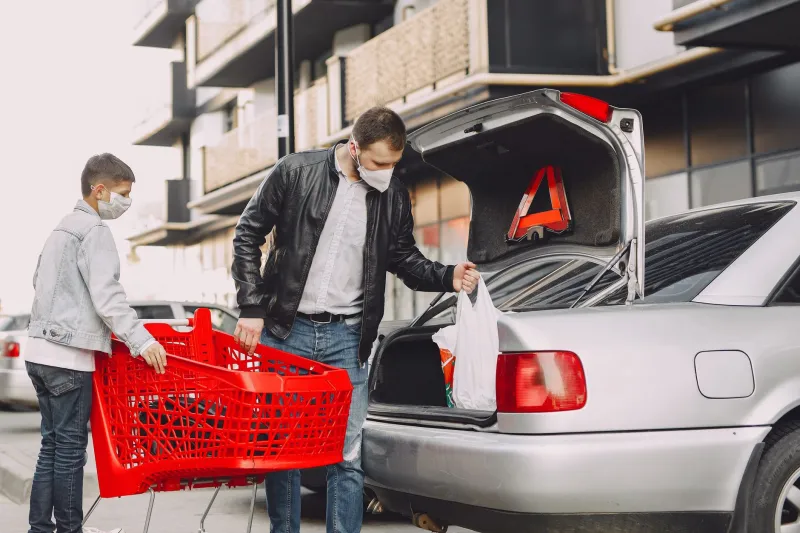
Saturday morning. The coffee's barely done brewing and you're already mentally mapping out the day: Target for paper towels and shampoo, the grocery store for produce and meat, the hardware store for that replacement faucet fixture, and maybe a quick swing through the mall because you need new sneakers. Oh, and the pet store — you're almost out of dog food.
Five stops. One day. You call it "getting everything done." But have you ever actually calculated what that Saturday routine costs you?
Most people haven't. And when they do, the number is uncomfortable.
Let's Actually Do the Math
Here's a realistic errand scenario for a suburban American family on a typical Saturday:
Route: Home → Target (3 miles) → Grocery store (2 miles) → Hardware store (4 miles) → Mall (5 miles) → Pet store (3 miles) → Home (6 miles) Total distance: approximately 23 miles
At the current IRS mileage rate of 67 cents per mile (which accounts for gas, depreciation, and maintenance), that's $15.41 in vehicle costs for a single shopping day. Do that every weekend and you're spending over $800 a year just moving between stores.
But that's the easy part to calculate. Here's what most people never account for.
The Time Tax Nobody Is Counting
Time is the sneakiest cost of the multi-store errand run. Let's be generous and estimate each stop as follows:
- Driving between stops: ~25 minutes total
- Parking at each location: 5 minutes × 5 stops = 25 minutes
- Time inside each store: 20 minutes average × 5 stores = 100 minutes
- Checkout lines: 7 minutes average × 5 stops = 35 minutes
Total: approximately 3 hours and 5 minutes
Now apply even a modest value to your time — say, $20/hour, which is below the median US wage — and that Saturday errand run just cost you $61 in time value on top of the vehicle costs. We're already at $76 before you've paid for a single item.
Over a year, that's more than $3,900 in combined time and transportation costs — just for the act of shopping across multiple locations.
The Impulse Buy Problem Nobody Admits
Here's the part that's hardest to defend against: every additional store you walk into is another opportunity for your brain to spend money you didn't plan to spend.
Retail environments are engineered for impulse purchasing. End caps, seasonal displays, "while you're here" product placements — they're not accidents. They're deliberate design decisions made by people who study consumer behavior for a living.
Research consistently shows that shoppers spend 13–40% more than planned during in-store trips, with the rate climbing when they visit multiple stores. Each new store resets the decision fatigue clock, making you more susceptible to unplanned purchases at stop three than you were at stop one.
For a family spending $400 per month on household goods and groceries, even a conservative 15% impulse overspend across five weekly stores adds up to $720 per year in unplanned purchases.
What the Weekend Actually Costs: A Full Picture
Let's put it all together for our five-store Saturday scenario, extrapolated to a full year:
| Cost Category | Weekly | Annual |
|---|---|---|
| Vehicle costs (mileage) | $15.41 | $802 |
| Time value (3 hrs @ $20/hr) | $60.00 | $3,120 |
| Impulse purchases (est.) | ~$13.85 | $720 |
| Total | $89.26 | $4,642 |
That's not the cost of what you bought. That's the cost of the act of shopping across multiple locations. Nearly five thousand dollars a year in friction, fuel, and unplanned spending — and most families have no idea it's happening.
The Hidden Wear-and-Tear Nobody Budgets For
Vehicle depreciation is a slow, invisible cost that most shoppers never attribute to their errand habits. The average American drives roughly 13,500 miles per year. For households that run multi-stop errands every weekend, shopping-related driving can account for 1,000–2,000 of those miles annually.
At an average vehicle depreciation rate of about 15 cents per mile (separate from gas), that's an additional $150–$300 per year coming directly off your car's resale value — paid entirely in service of the ritual of going to five different stores.
What Families Are Doing Differently
Across the country, a growing number of households are rethinking the Saturday errand circuit — not out of laziness, but out of genuine financial awareness. The shift isn't dramatic; it's practical.
Instead of building a weekend around store stops, these families are consolidating their shopping into a single platform or location that covers multiple categories. The result isn't just fewer miles driven — it's a fundamentally different relationship with discretionary time.
When Saturday isn't consumed by a five-stop retail tour, that time goes somewhere else: a longer morning at home, a trip to the park, a meal cooked instead of grabbed at a drive-through between errands. The opportunity cost of store-hopping isn't just financial. It's experiential.
The Smarter Approach
Consolidation doesn't mean settling. It means recognizing that the mental and financial overhead of fragmented shopping has a real price — and deciding that price isn't worth paying.
A few practical shifts that families are making:
Order ahead for non-perishables. Paper towels, cleaning supplies, pet food, personal care items — none of these require a physical store visit. Order them from a single source on a regular schedule and remove those stops from your Saturday entirely.
Batch your in-store trips. If you prefer shopping in person, choose one location that covers the most categories and do your weekly shopping there. One stop. One parking job. One checkout line.
Track your errand time for one month. Most people genuinely don't know how many hours they spend in transit between stores. Logging it — even loosely — tends to be a wake-up call.
**Separate "errand" from "leisure." ** Browsing at the mall or a specialty store can be genuinely enjoyable. But when it's embedded in a five-stop obligation run, it stops being fun and starts being friction. Keep the fun shopping intentional and separate.
Your Weekend Has More Value Than You're Giving It
The store-hopping errand run is one of those habits that feels productive — you're checking things off a list, you're being a responsible adult, you're getting stuff done. But productive and efficient aren't the same thing.
When you add up the gas, the time, the wear on your car, and the impulse buys that accumulate at every additional stop, the multi-store Saturday is one of the more expensive routines in American household life. The math is pretty clear on that.
The good news? It's also one of the easiest habits to change — and the reclaimed time and money tend to show up almost immediately.